Enforcement and disclosure
The records behind
the comparison.
Selected tables, figures and document excerpts from my Ground Eight on enforcement and vulnerability evidence.
I say material records were missing when the Ombudsman made her decision. She could not assess them, and I could not use them. When I asked for my data, the Service said I had not identified which documents were missing. I still cannot tell it what is on the pages Topaz has blacked out. If the Service refuses to address that gap when deciding my reconsideration request, perhaps it will be time for the Administrative Court to ask why.
The source notes and counting qualifications are included with each excerpt. Select an image to enlarge it; the missing-date document also opens as a PDF.
The 123 letters, one by one — dates and source pages →
Possession warnings across the disclosures
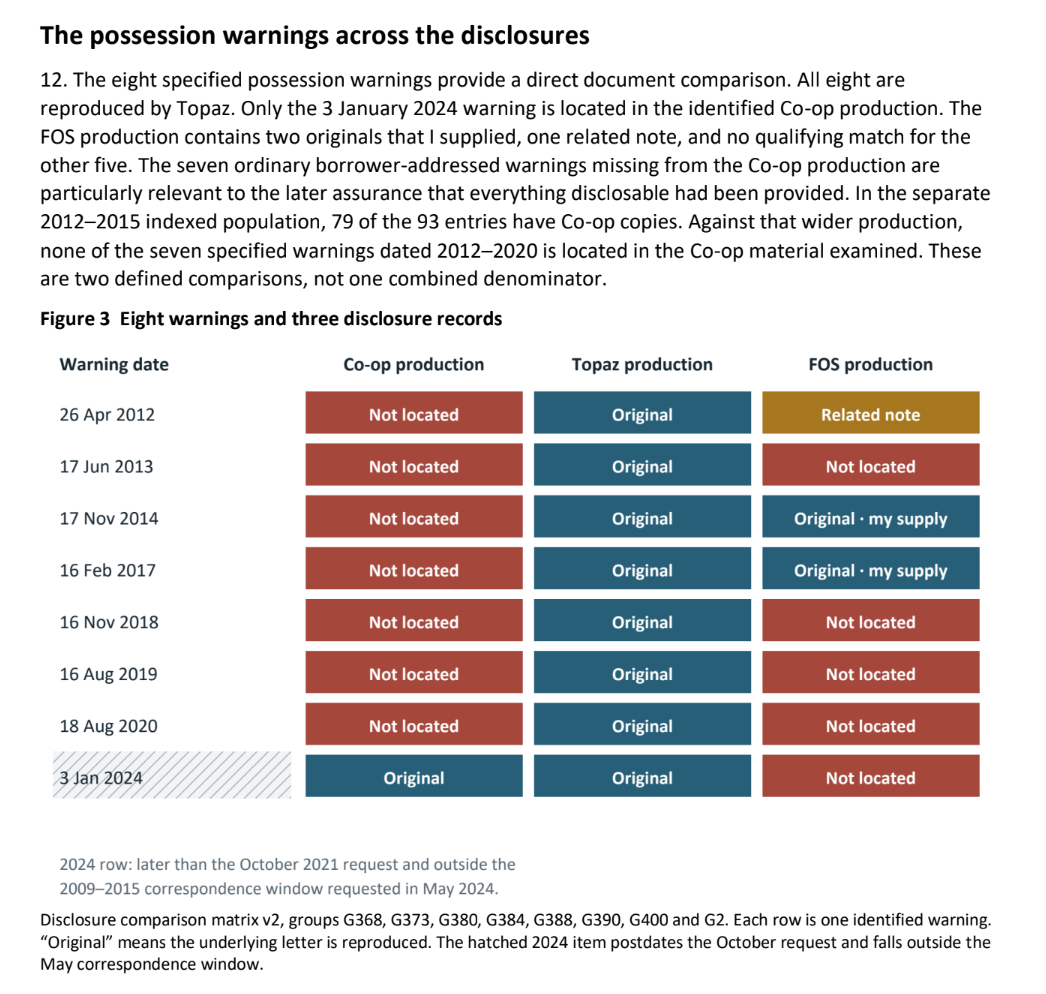
Eight possession warnings, 2012 to 2024. Topaz’s disclosure reproduces all eight; the Co-op’s identified production has only the 3 January 2024 warning; the disclosed FOS file has two originals I supplied and one related note.
Supporting correspondence counts by period

All indexed correspondence by year, 2012 to 2025: 314 entries, of which 71 have an original in the disclosed FOS file and 187 were not located. For 2012 to 2015, 86 of 93 entries were not located.
Enforcement correspondence across the years
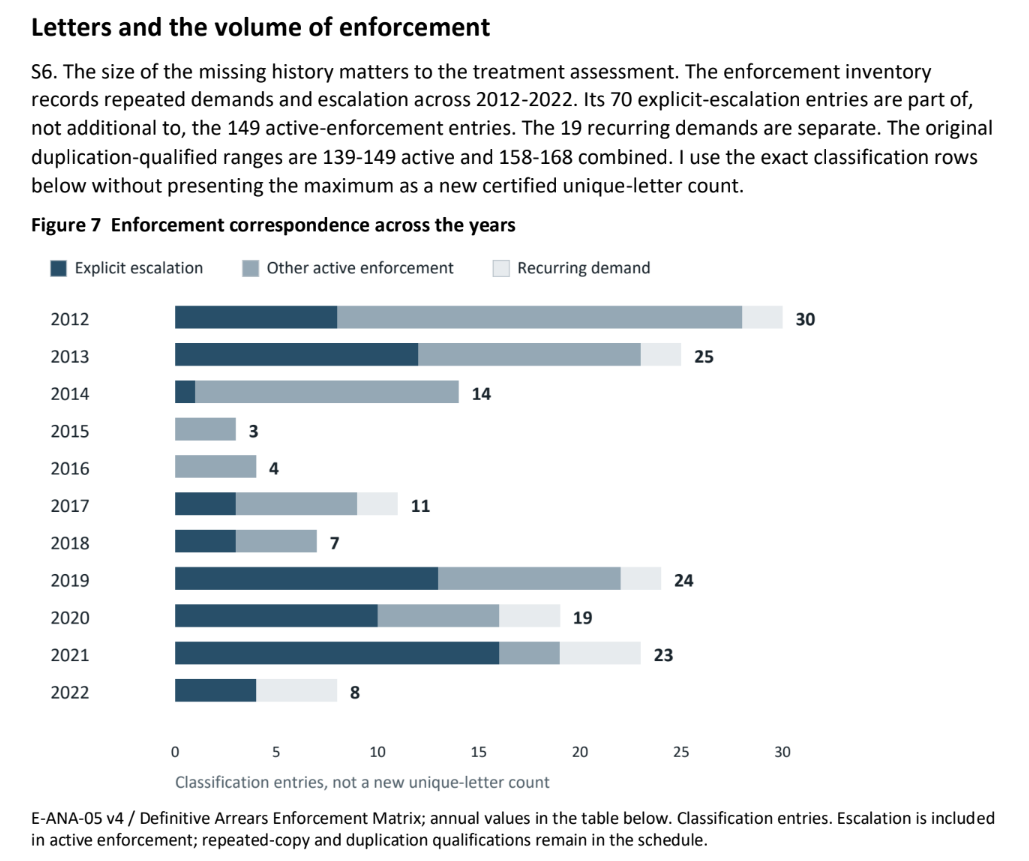
The enforcement inventory by year, 2012 to 2022: 149 active-enforcement entries, including 70 explicit escalations, plus 19 recurring demands. These are classification entries, not a count of separate letters.
Annual enforcement inventory
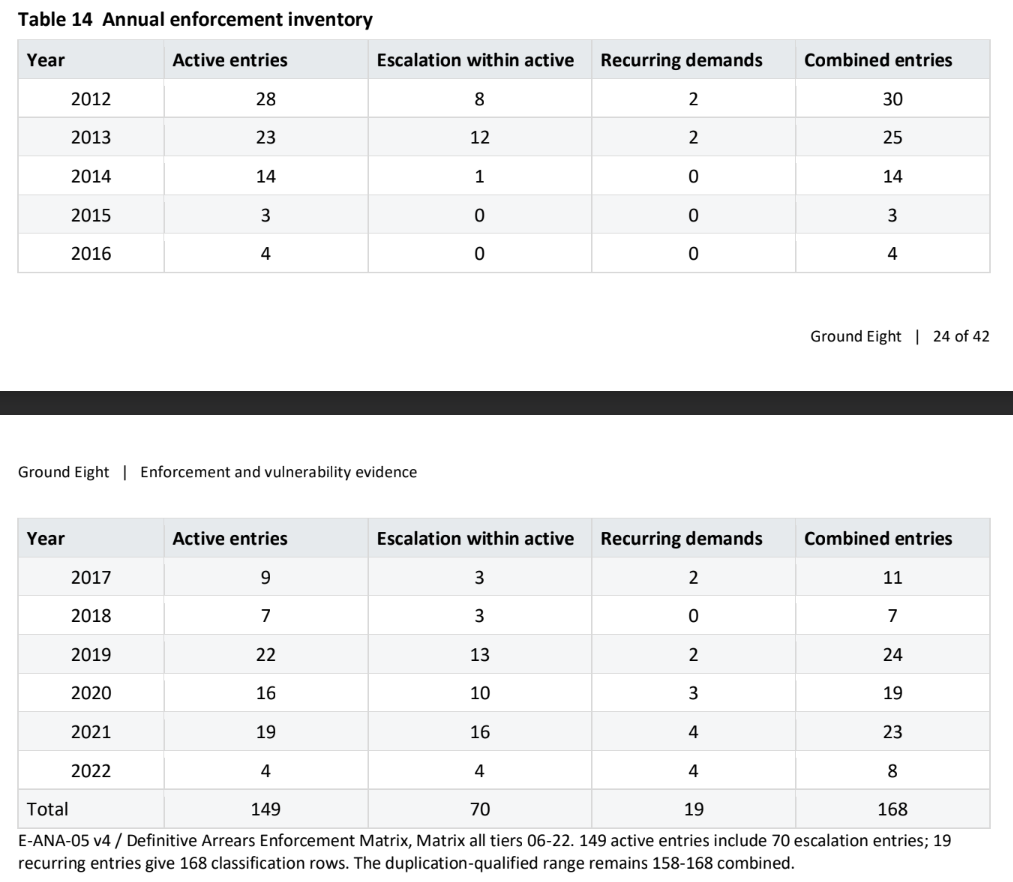
The same inventory as a table: 168 classification rows in all. After 2012 and 2013, the busiest years are 2019 (24), 2020 (19) and 2021 (23).
Source locations and dated arrears
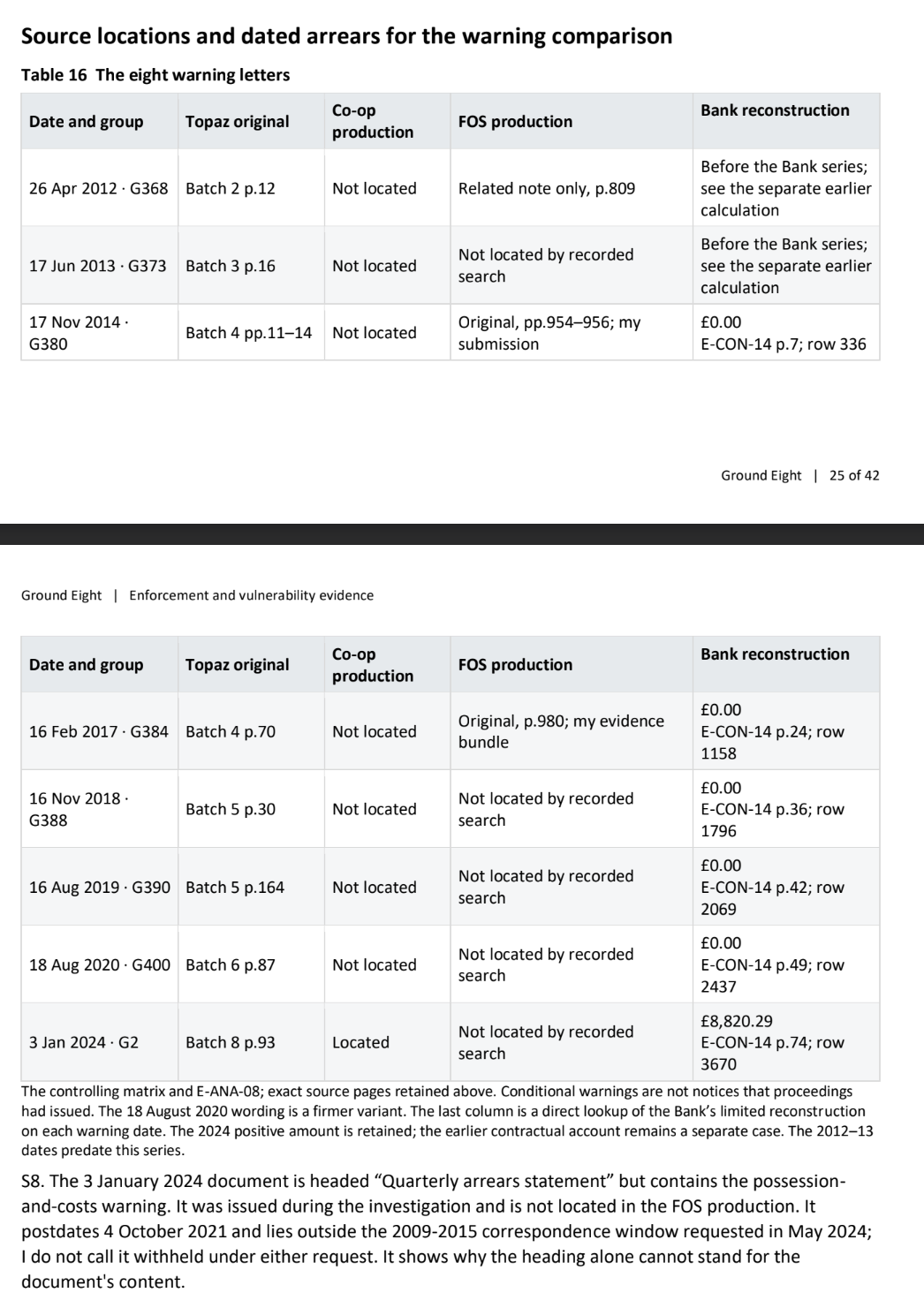
The eight warning letters with their source pages. On five of the warning dates from 2014 to 2020, the Bank’s own reconstruction shows £0 arrears.
The 2017 correspondence in the FOS file
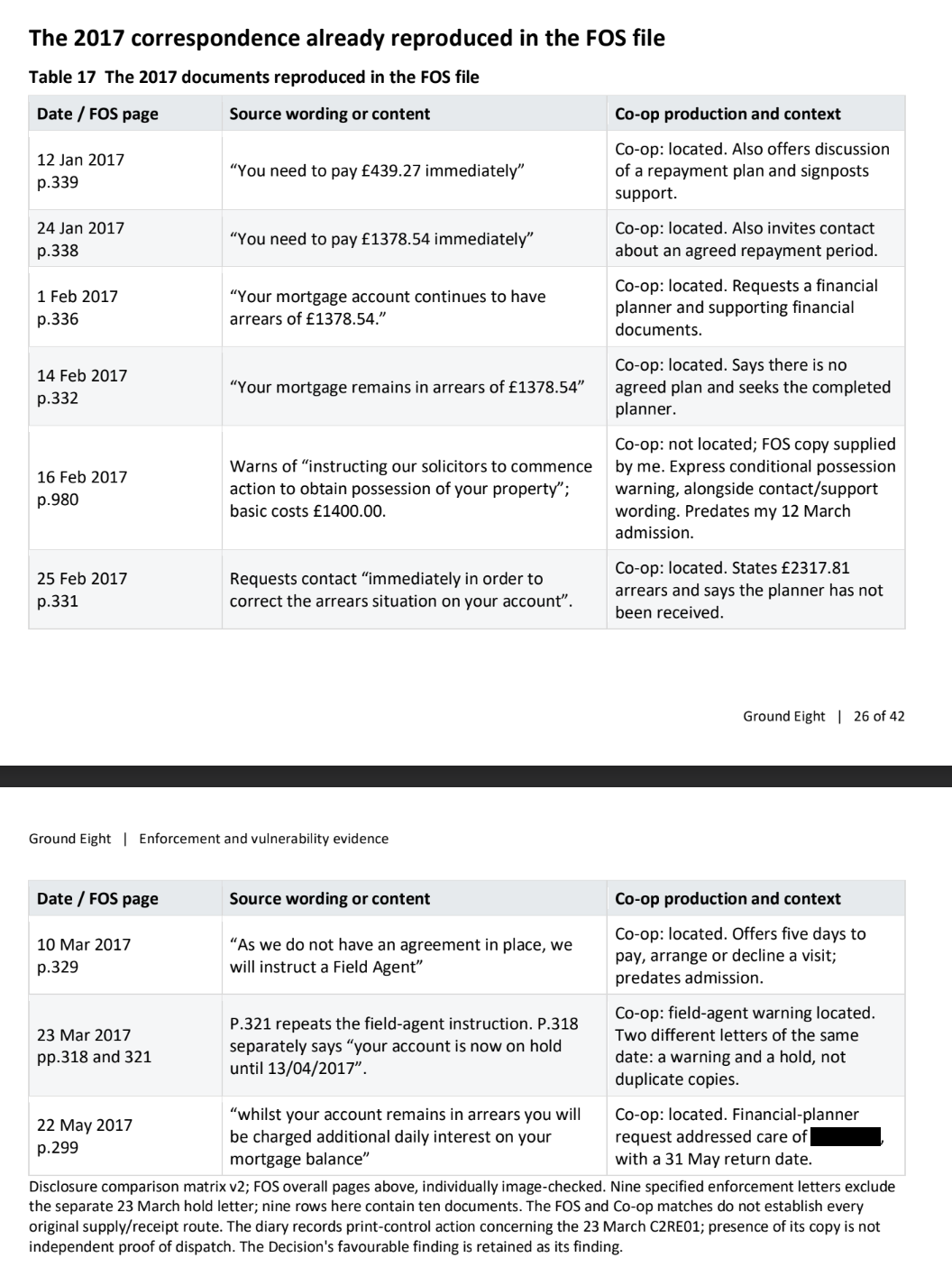
The 2017 letters that are in the disclosed FOS file: letters from January to May 2017, including the 16 February possession warning, which is there only because I supplied it.
The 2019 customer-call gap

No customer-call entry involving me from 12 February to 26 April 2019, while contact demands, a repossession warning, the move to litigation and the litigation pack went ahead. The gap concerns staff entries; it is not proof that no calls occurred.
Escalation before and during the 2019 gap

The dated events behind that gap, from the 6 February 2019 “intention to start repossession proceedings” letter to the 27 April note “No contact from borrower since 11/02”.
Letters and recorded responses
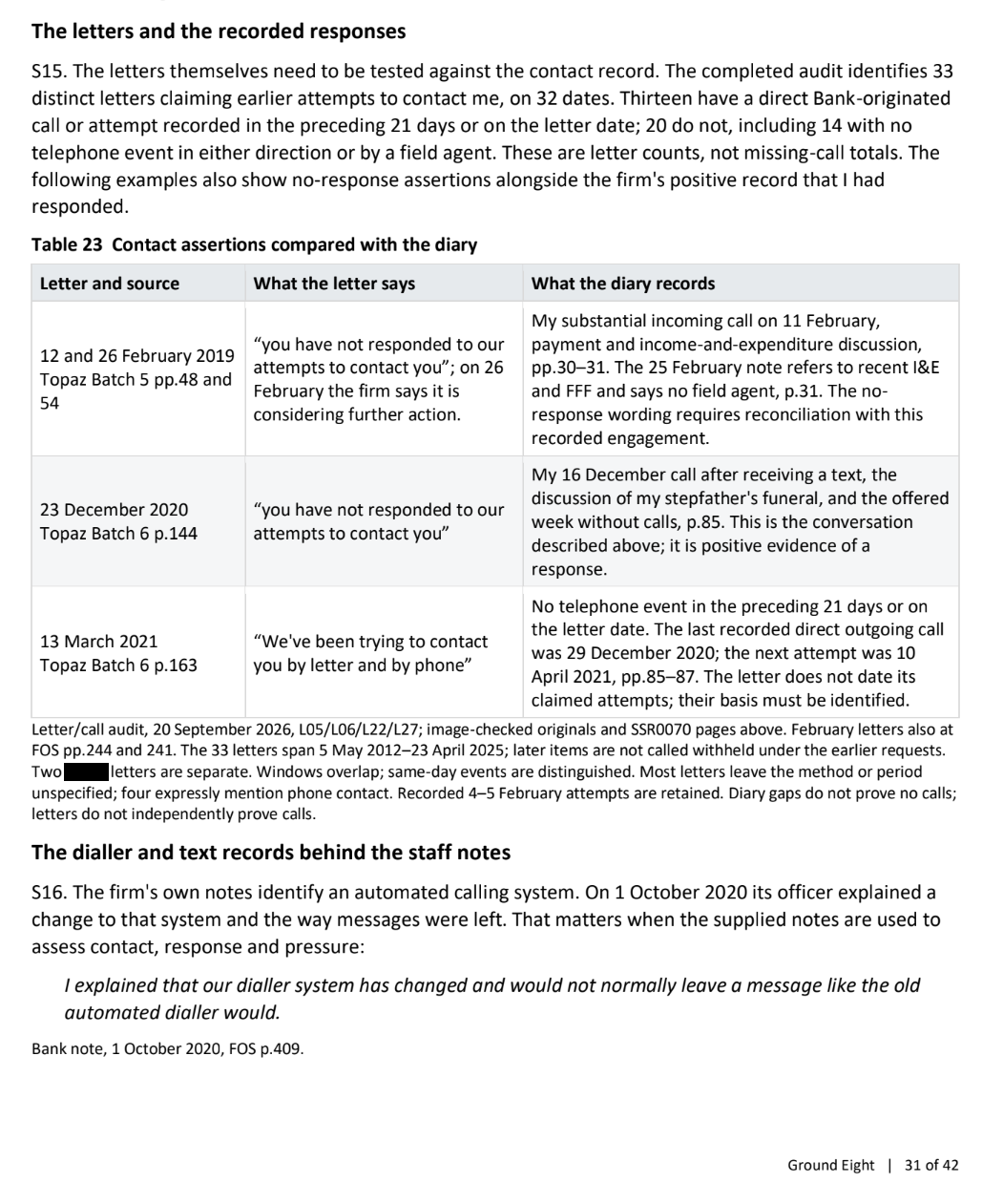
Thirty-three letters claiming earlier attempts to contact me: 20 have no Bank call or attempt recorded in the 21 days before or on the letter date, including 14 with no telephone event at all. Three examples are set against what the diary records.
The source systems behind the notes

The automated dialler and text systems named in the notes, and the underlying records that would be needed to check them.
Dates missing from the supplied notes
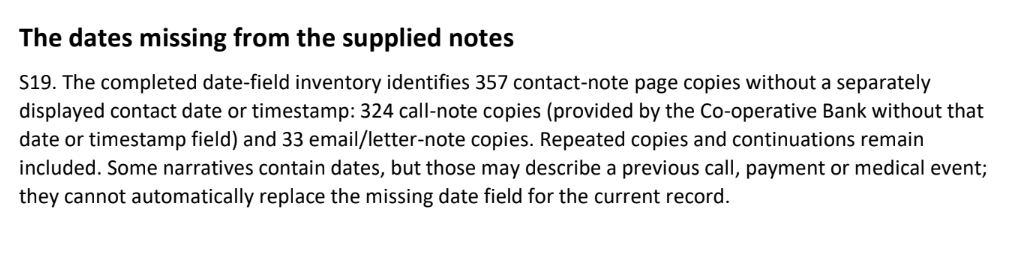
357 contact-note page copies supplied without a separate contact date or timestamp: 324 call-note copies and 33 email or letter notes.
Missing date fields and later notes

Where those undated pages sit in each Co-op disclosure, and five calls whose fuller note was written up on a later date.
The limits imposed by redacted material

The 80 wholly blacked-out pages in Topaz’s disclosure, in sixteen runs across five batches. Their contents cannot be compared with anything.
Why I could not provide the comparison sooner

Why I could not provide the complete comparison sooner: my subject access requests from March 2022 to November 2025, and the responses recorded.